
VisualAcoustic.ai is the public-facing demonstration site for Phocoustic, Inc., showcasing physics-anchored anomaly detection and the foundations of safe, evidence-qualified cognitive intelligence.
Industrial and manufacturing process
control
Biomedical and scientific instrumentation
Human-assistive and environmental sensing
Governance-grade data verification and
compliance
Descriptions on this site summarize high-level capabilities of the VisualAcoustic / Phocoustic platform. Internal algorithms, execution logic, developmental semantics, and specific implementations are defined exclusively in Phocoustic’s U.S. and international patent filings. Nothing on this site should be considered a full technical specification, algorithmic description, or public enabling disclosure.
Through its recently filed U.S. and international patent applications, the VisualAcoustic platform unites light and sound into a single, persistence-anchored framework—delivering measurable, auditable intelligence where precision, safety, and accountability matter most.
Why Phocoustic’s Architecture Is Difficult to Design Around: A Patent-Defensive Technical Brief
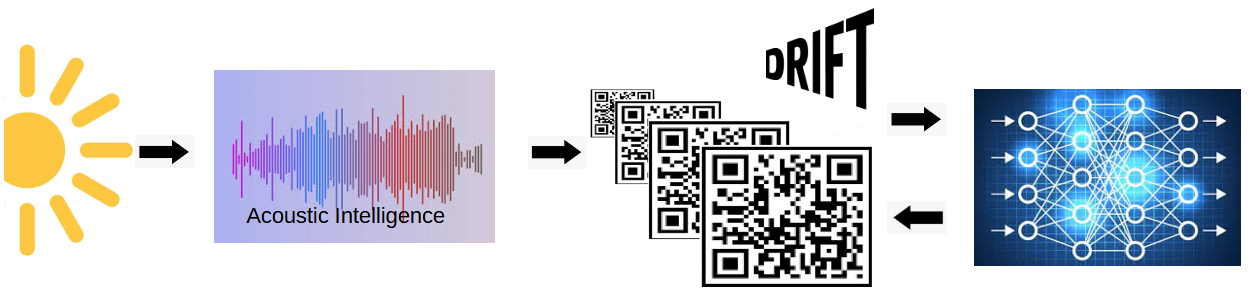
VisualAcoustic.ai highlights a physics-anchored engine that uses proprietary, patent-protected representations (including QR-like arrow-matrix encodings and dual-domain drift signatures) to help reveal subtle instabilities in real-world systems. The site is focused on capabilities and use cases; detailed algorithms remain within the formal patent record.
December 5, 2025 — Champaign, Illinois — Phocoustic, Inc., the company pioneering physics-anchored perception and cognition, announces the filing of CIP-13, a continuation-in-part in its global patent family. CIP-13 extends the core VisualAcoustic™ framework with three key capability classes: Object Context Identification (OCID), Object-Resolved Drift Lineage (ORDL), and a new class of environmentally conditioned reasoning mechanisms under Semantic Epigenetics (SEGEN).
CIP-13 builds on CIP-10, CIP-10 ACI, CIP-11, CIP-12, and PCT filings and is designed to advance physics-qualified cognitive workflows without relying on training datasets or gradient-based optimization. Details of specific algorithms and data structures appear only in the CIP-13 specification.
Modern production lines, PCB inspection systems, and conveyor environments require that each object be evaluated independently, with its own drift history and audit trail. CIP-13 formalizes mechanisms that allow the platform to bind drift observations to the correct object context in a deterministic, physics-anchored fashion.
OCID is a patent-pending concept that associates drift measurements with specific objects in sequential imaging or sensing environments. At a high level, this supports per-object auditability and prevents cross-object confusion in inspection streams. The precise implementation is described in CIP-13 and related filings.
ORDL provides a framework for per-object drift lineage and evolution. It supports:
ORDL is intended to work across both static inspection (PCB, wafer) and dynamic systems (conveyors, robotics). Mathematical formalisms and data structures are captured in the patent filings, not on this website.
CIP-13 also introduces SEGEN (Semantic Epigenetics Generator), which conceptually governs how environmental conditions can influence semantic development within physics-anchored cognition. At a high level, SEGEN treats VISURA-captured signals—such as illumination stability, geometry, drift recurrence patterns, operator cues, and multi-camera coherence—as structured “influence channels” that shape how semantic structures are reinforced or suppressed.
SEGEN is not described algorithmically on this site. Its internal logic, influence vectors, and interaction with PHOENIX and the Semantic Genome (SGN) are defined in CIP-13 and related applications.
CIP-13 is part of a broader strategy to maintain a comprehensive intellectual-property portfolio around physics-anchored perception, inspection, and cognition. Together with CIP-12 and PCT-2, CIP-13 seeks to secure priority for:
The site provides an overview of these concepts; full technical definitions and claims reside in the underlying patent filings.
VisualAcoustic.ai Announces Major Patent Filings Advancing
Physics-Anchored Cognitive Intelligence
New PCT and CIP applications define a framework for deterministic,
physics-validated AI systems.
Champaign, IL — December 2, 2025 — VisualAcoustic.ai, a research and development initiative of Phocoustic, Inc., announces two patent milestones: the international filing of PCT-2 and the U.S. filing of CIP-12. These filings further expand a platform for safe, deterministic, and physically validated machine cognition.
Taken together, these documents describe a Physics-Anchored Cognitive Intelligence (PACI) architecture in which meaning formation is governed by real-world evidence and physics constraints, rather than by unconstrained statistical training alone. The website summarizes these ideas but does not reproduce the detailed technical disclosures.
PCT-2 protects a multi-module architecture for physics-anchored cognition, including:
Only high-level descriptions are provided here; implementation details and claim boundaries are defined in the PCT-2 specification.
CIP-12 formalizes the field of Developmental Semantics for physics-anchored cognitive systems. It describes how a cognitive engine can grow, refine, and stabilize its semantics over time when guided by physically admissible drift evidence.
Key capability areas include:
The detailed mechanics are not disclosed on this site; they are reserved for the CIP-12 application.
“Many AI systems operate as statistical approximators. Our goal is to build a platform that ties meaning to measurable physical behavior,” said Stephen Francis, founder and inventor of VisualAcoustic.ai. “These filings set the stage for systems that remain bounded by physics and provide more transparent, evidence-qualified reasoning pathways.”
VisualAcoustic.ai is aimed at environments where safety, transparency, and physical correctness are critical, including semiconductor lithography, industrial inspection, structural monitoring, robotics, advanced sensing, and automotive intelligence under adverse visibility conditions.
With PCT-2, CIP-12, and CIP-13, Phocoustic is assembling a patent portfolio centered on physics-grounded cognitive architectures. This site provides a high-level public view; full technical disclosures remain in the patent record.
The Physics-Anchored Cognitive Intelligence (PACI) architecture developed by VisualAcoustic.ai differs from neural-network and purely statistical AI systems. PACI is organized as an interdependent set of modules — including PASDE, PADQ, PHOENIX, SGN, VGER, and related components — where each layer assumes that the preceding layer has applied defined physics-based checks.
Many AI systems can be approximated using off-the-shelf libraries. PACI is intentionally structured so that replacing core modules with lookalike parts (for example, generic CNNs or unconstrained feature extractors) would change its operational behavior and remove it from the domain protected by Phocoustic’s patents. This does not imply impossibility of implementation by others, but highlights that straightforward modular substitution is unlikely to reproduce the claimed, physics-anchored behavior.
At a conceptual level:
The specific data structures, thresholds, and algorithms that bind these layers together are defined in Phocoustic’s patent applications and are not exposed on this website.
The following acronyms are provided for orientation only. They describe roles and conceptual responsibilities, not implementation details. Full technical definitions appear in Phocoustic’s patent filings.
ACI – Artificial Conscious / Cognitive Intelligence
A physics-anchored cognitive framework in which higher-level reasoning
is bounded by drift evidence and coherence conditions.
PASDE – Physics-Anchored Semantic Drift Extraction
A set of patent-protected methods for extracting physically qualified
drift signatures from multispectral sensor data.
CAP – Cognitive Activation Potential
A conceptual stability indicator used to decide when physics-anchored
evidence may be sufficient to support higher-level semantics.
CCE – Conscious Coherence Envelope
A conceptual boundary representing the range of conditions under which
higher-level cognitive states are permitted to activate.
CCSM – Cross-Camera Semantic Memory
A construct for maintaining cross-view semantic consistency when
multiple VISURA viewpoints are present.
DDAR – Dynamic Drift-Admissibility Reference
A physics-guided reference that adjusts to evolving conditions while
preserving admissibility constraints.
PADR – Physics-Anchored Drift Reduction
A drift-processing concept for emphasizing persistent, physically
meaningful change while suppressing unstable fluctuations.
PQRC – Pattern-Quantized Ranking Code
A structured encoding of drift direction, magnitude, and lineage using
discrete arrow-like or glyph-like elements.
VASDE – VisualAcoustic Semantic Drift Engine
The overarching architecture that combines drift extraction,
multispectral sensing, and semantic interpretation.
QAIR – Quantized Audio-Inferred Representation
A patent-pending approach for encoding multispectral signals into an
acoustic-like, structured domain to support drift-based anomaly
analysis.
VISURA –
Visual-Infrared-Structured-light-Ultraviolet-Acoustic Layer
A multi-modal acquisition layer that provides the raw sensory input for
drift extraction.
XVT – Transformer-Based Semantic Interpreter
A transformer-based component that works with physics-anchored
representations (e.g., PQRC/QAIR) to produce contextual decisions and
alerts.
Phocoustic has filed a provisional patent for the VASDE Transformer Architecture (XVTA), focusing on real-time semantic drift detection and anomaly classification built on top of physics-anchored representations.
Detailed network architectures and training procedures are not described here and remain in the provisional patent documentation.
QAIR is a patent-pending representation within the VisualAcoustic platform that transforms VISURA multispectral signals into structured frames for drift-based anomaly detection and semantic reasoning. These frames are designed to highlight physically significant change while remaining compatible with downstream analytics and AI tools.
These domains are examples only. Concrete embodiments, configurations, and performance details appear in patent filings and technical documents, not on this website.
VisualAcoustic Semantic Drift Engine (VASDE): Physics-First Anomaly Detection
Phocoustic’s VisualAcoustic Semantic Drift Engine (VASDE) represents a class of anomaly detection methods that treat sensor data as rich physical signals rather than purely statistical patterns. Instead of depending solely on large training datasets, VASDE uses patented physics-anchored representations to highlight subtle instabilities and drift.
Conceptually, VASDE interprets visual and multispectral inputs as structured wave-like signals and maps them into proprietary, drift-aware encodings. These encodings preserve information about how change evolves in time and space, allowing the system to emphasize persistent, physically meaningful deviations while deemphasizing superficial variation. The exact mathematical transforms and quantization methods are defined in Phocoustic’s patent family and are not publicly disclosed here.
A key differentiator is an emphasis on persistence and coherence. Rather than reacting to isolated spikes, VASDE focuses on change that behaves consistently over defined windows or conditions. This aligns more closely with how a skilled human inspector confirms that “something is truly wrong” rather than reacting to every flicker or glare.
VASDE’s outputs can be visualized using directional overlays or glyph-like structures and can be further summarized into semantic prompts or alerts for dashboards and control systems. In this way, VASDE does not compete with AI—it conditions and informs it using physics-guided evidence.
The same framework can be adapted across domains such as semiconductor wafer polishing, PCB solder joint inspection, and visibility-challenged driving scenes, without requiring separate large datasets for each new defect type.
All detailed algorithms, tuning procedures, and data structures remain within Phocoustic’s patent filings and internal technical documents.
In one internal demonstration, the platform analyzes a printed circuit board:
This illustrates the workflow rather than disclosing the underlying algorithms used by VASDE to generate its outputs.


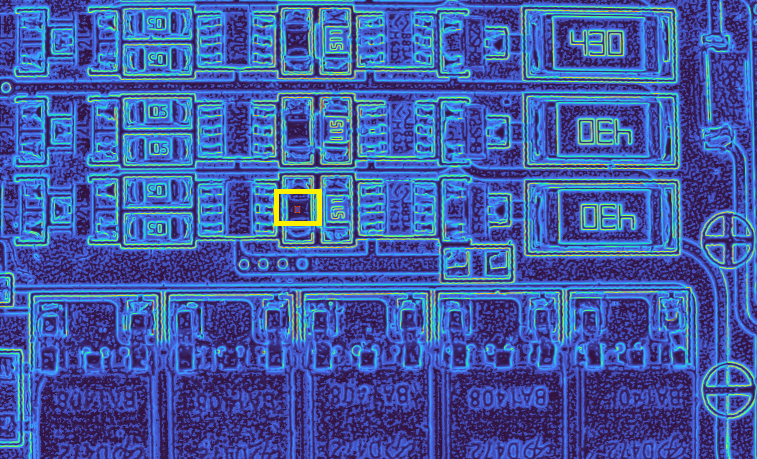
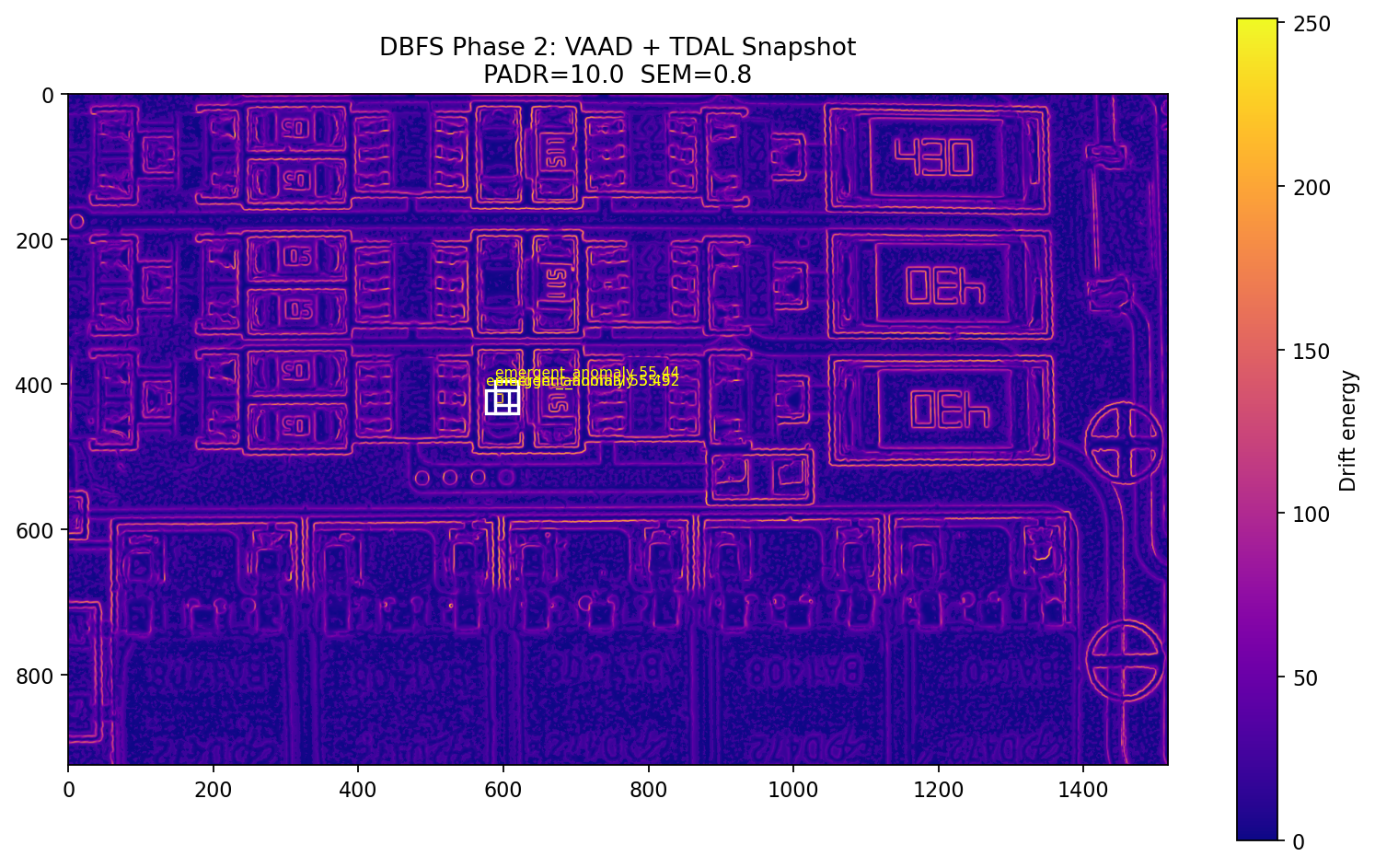
The PCB images on this site illustrate how PASDE can reveal physically meaningful drift and early-stage anomalies even when operating with a modest 1.3-megapixel industrial camera, using only the physics-anchored measurements permitted for public disclosure on VisualAcoustic.ai. Because PASDE analyzes structured change rather than relying solely on pixel density, its performance scales with sensor fidelity: on a modern high-end machine-vision platform—such as a Cognex-class system offering approximately 132 megapixels of resolution—each pixel represents a dramatically smaller physical region on the target surface. Under typical optics for PCB or semiconductor inspection, this can translate to effective sampling on the order of single-digit microns per pixel, enabling PASDE-based software to highlight drift-consistent micro-irregularities potentially approaching the 1–2 µm class in suitable optical configurations. These figures are illustrative and depend on lensing, working distance, illumination, sensor pitch, and system calibration, but they convey a core and patent-aligned idea: as spatial resolution increases, PASDE’s physics-anchored drift extraction can expose progressively finer structural deviations without altering the underlying algorithmic framework disclosed in Phocoustic’s patent filings.
These images demonstrate the concept of physics-informed drift visualization only; they do not reveal the underlying computational methods.
Investor Note: While many inspection systems rely on extensive deep-learning retraining, Phocoustic’s approach emphasizes proprietary physics-anchored representations that are designed to be difficult to reproduce using generic machine-learning pipelines. This website summarizes those advantages without disclosing the internal implementation.
Phocoustic’s thesis is that quality assurance and safety can benefit from moving beyond brute-force training. Conventional anomaly detection depends heavily on massive image libraries and frequent retraining cycles. These methods can be powerful, but they are often opaque and expensive to adapt to new lines or environments.
VisualAcoustic’s VASDE platform takes a different approach. Rather than memorizing examples, it constructs physics-informed representations of change that make important anomalies more apparent and explainable. Informally, we describe this as “bottling light” into a structured form that preserves how signals behave over time.
In practice, sensor data is transformed into high-level drift structures that are designed to be robust, repeatable, and compatible with downstream analytics. These structures are defined in Phocoustic’s patents and are not detailed on this site.
This approach supports:
Traditional optical systems — including advanced machine-vision platforms — largely operate within one domain: they use light intensity and its derivatives to measure change. Their performance can be sensitive to lighting conditions, calibration drift, and noise.
Phocoustic’s VisualAcoustic Semantic Drift Engine (VASDE) formalizes a different measurement space. By anchoring its representations to drift behavior and physics-based conditions, the system aims to distinguish between superficial fluctuations and the early signs of genuine instability. This creates what we regard as a distinct, legally defensible domain of invention, further described in the company’s patent portfolio.
At a high level, VASDE fuses concepts from photonics, acoustics, and drift physics into a unified, quantized framework. This allows the system to interpret change as both a physical phenomenon and a semantic event, so that every anomaly remains traceable to real-world evidence rather than opaque model internals.
Phocoustic’s VisualAcoustic.ai platform highlights a shift from brute-force learning toward physics-first understanding. Just as a medical lab bottles blood samples to analyze them under controlled procedures, VASDE “bottles” sensor data into structured frames that expose potential problems before they escalate. This is anomaly detection that emphasizes explainability, efficiency, and readiness for real industrial conditions.
The VisualAcoustic Semantic Drift Engine (VASDE) is intentionally designed to sit outside the most crowded portions of the machine-vision and deep-learning patent landscape. It does so by operating in a physics-anchored drift domain rather than conventional image-feature space.
Many existing systems rely on convolutional networks, transformers, learned feature embeddings, and pixel-space classification. By contrast, VASDE uses proprietary, drift-oriented representations that are defined in Phocoustic’s patents and are not described algorithmically here.
Traditional optics patents often focus on band ratios, reflectance features, or hyperspectral cube analysis. VASDE treats optical measurements as part of a broader, physics-informed evidence space rather than as raw pixel grids.
Classical frameworks lean on thresholding, Fourier transforms, and statistical change detection. VASDE introduces additional governance structures (such as persistence windows, resonance constraints, and self-consistency checks) described at length in the patent filings.
Many XAI approaches provide post-hoc visualizations of neural decisions. Phocoustic’s approach is to make evidence governance native: decision provenance and operator-intent controls are part of the system’s core design, not add-ons.
The comparative descriptions above are for educational and contextual purposes only. They do not constitute a guarantee of non-infringement or freedom to operate. Actual legal clearance depends on final claim language, examiner outcomes, and ongoing portfolio development.
The technologies described on this website are protected by one or more U.S. and international patent applications owned by Phocoustic Inc., including Continuation-in-Part filings (e.g., CIP-4 through CIP-13), related provisional and non-provisional applications, and PCT filings.
These filings cover innovations related to dual-domain sensing, physics-anchored drift extraction and reduction, resonance-driven coherence models, governance stacks, and multi-modal acquisition with physics-anchored semantic mapping. All systems described operate in the classical domain; references to “quantum-conditioned” effects refer to classical sensor measurements influenced by quantum-origin physical phenomena, not to quantum computing.
All information on this site is provided for explanatory and marketing purposes only. Nothing herein grants, nor should be construed as granting, any license or rights under Phocoustic’s patents, pending applications, copyrights, trademarks, or trade secrets. Any unauthorized use, reproduction, reverse engineering, or modification of Phocoustic’s patented or patent-pending technologies is strictly prohibited.
© 2025 Phocoustic Inc. All rights reserved.
Phocoustic® is a registered trademark of Phocoustic Inc. in the United States and other jurisdictions. VisualAcoustic.ai and the Phocoustic logo are trademarks or service marks of Phocoustic Inc.
PhoSight and PhoScope are proprietary technology and product names used by Phocoustic Inc. to describe internal demonstration systems and related embodiments of the Phocoustic platform. They may be used in the future as trademarks or service marks. All other names and brands are the property of their respective owners.
All site content, including text, images, videos, and downloadable documents, is protected under applicable copyright, patent, and trademark laws. Reproduction or redistribution without express written permission from Phocoustic Inc. is prohibited.
(~1000 words, patent-neutral, no references to Phocoustic systems or pipelines)
Modern scientific approaches to physical sensing, measurement, and computational interpretation rely on a multidisciplinary foundation that merges physics, mathematics, signal processing, logic, and computational modeling. These disciplines collectively enable the analysis of how real-world systems evolve, how physical signals encode structure, and how information can be extracted, filtered, and interpreted. The following discussion outlines several core scientific domains and conceptual tools commonly used when studying how physical change manifests in sensor data, how it may be quantified, and how structured meaning may emerge from those measurements.
All measurement systems begin with the premise that the physical world produces signals—whether electromagnetic, mechanical, acoustic, or thermal—that carry information about underlying structure or change. The field of surface metrology, for example, formalizes how geometric features and imperfections can be interpreted using measurable quantities such as gradients, curvature, and reflectance variations. Similarly, optics and photonics provide the theoretical framework for understanding how light interacts with surfaces, how illumination affects observable quantities, and how sensors convert photons into electrical outputs.
Central to these domains is the concept of signal fidelity: the ability of a measurement to accurately reflect a physical state. Physics imposes constraints on how surfaces can deform, how motion propagates, and how electromagnetic fields evolve. These constraints form the basis for distinguishing meaningful physical events from irrelevant or spurious variations caused by noise, environmental fluctuations, or sensor imperfections. Measurement science emphasizes calibration, reference models, and uncertainty quantification to ensure that observed signals remain grounded in the underlying reality they represent.
Mathematics plays a central role in representing change across space and time. A foundational concept is the gradient, expressing how a scalar field varies spatially. Gradients appear in contexts ranging from optical edge detection to surface estimation. For a scalar function I(x,y,t), the spatial derivatives ∂I/∂x and ∂I/∂y quantify local rates of change and can signify edges, curvature transitions, or underlying material boundaries.
Temporal mathematics, particularly finite-difference approximations, offer ways to quantify how a quantity evolves across sequential observations. A simple temporal difference I(t)−I(t−1) captures instantaneous change, but more robust metrics often incorporate multi-frame windows, smoothing, or statistical stability measures.
Vector calculus, tensor representations, and differential operators extend these ideas by describing more complex dynamics such as rotational change, deformation fields, or anisotropic effects. Combined, these tools facilitate the representation of motion, distortion, and structural evolution in a form that can be systematically analyzed.
A key principle across physics and applied mathematics is continuity: the idea that physical phenomena generally evolve smoothly rather than in arbitrarily abrupt or isolated jumps. This notion emerges from fundamental laws governing thermal diffusion, elasticity, electromagnetism, and fluid flow. As a result, many scientific disciplines employ continuity constraints when interpreting observational data.
For instance, a field f(x,y,t) whose spatial derivative abruptly spikes at a single pixel or location may indicate measurement noise, reflectance artifact, or sensor error rather than an actual physical discontinuity. Similarly, a temporal signal that oscillates erratically in a high-frequency manner may not correspond to a physically meaningful change in the environment.
Mathematically, continuity is often expressed using bounds on derivatives—e.g., requiring that ∥∇f∥ remain below a certain threshold—or through regularity assumptions such as Lipschitz continuity, smoothness, or differentiability. These ideas are essential for ensuring that interpretation frameworks remain grounded in the plausible behavior of physical systems rather than in arbitrary fluctuations.
Physical changes typically exhibit a degree of persistence: once motion, deformation, or environmental variation begins, it tends to manifest across multiple sequential observations. Persistence is therefore a central concept in disciplines such as mechanical diagnostics, materials science, structural monitoring, and motion analysis.
Persistence can be mathematically represented using temporal averaging, exponential smoothing, or windowed integrals. For example, a persistence metric P=(1/N)∑k=1N∣Dt−k∣ captures how consistently a change has appeared over a given time horizon. In many scientific contexts, multi-frame stability is necessary to differentiate noise or glare from actual events such as deformation, vibration, or structural drift.
These principles reflect real-world constraints: noise is usually inconsistent, environmental fluctuations are often transient, but underlying mechanical or geometric changes tend to produce coherent multi-sample signatures.
The field of geometric optics describes how light interacts with surfaces, including reflection, refraction, scattering, and interference. When structured illumination (such as projected patterns or controlled wavelengths) is used, distortions in the returned signal reveal geometric information about the surface or medium. For example, deformation of a projected grid or line pattern can indicate depth variation, tilt, curvature, or material irregularity.
Structured-light analysis frequently uses mathematical tools including homographies, shape-from-motion equations, phase unwrapping, and light transport models. These frameworks rely on the predictable behavior of light under geometric transformation, making them valuable across disciplines such as industrial inspection, robotic perception, and 3D reconstruction.
Beyond sensing and mathematics lies the domain of formal logic and decision-making frameworks. Logic governs how observations can be combined, compared, or filtered to form higher-level interpretations. Classical inference mechanisms use rules such as:
If two measurements disagree beyond bounded tolerance, reevaluate their admissibility.
If physical constraints are violated, the interpretation must be rejected.
If a signal persists across multiple conditions, promote it to a higher level of significance.
Reference models—whether static baselines or adaptive frameworks—are commonly used to provide context. These models define expected behavior or “ground truth” against which new observations can be compared. Decision-theoretic principles further guide how uncertainty, noise, and partial information are handled, ensuring that interpretations remain consistent and robust.
Across engineering and physics, robust interpretation requires mechanisms for rejecting spurious data. This involves redundancy, cross-channel verification, consistency checks, and invariance principles. For instance:
Multiple independent measurements may confirm or refute a signal.
Angular or translational invariants may strengthen interpretation.
Energy-based constraints may eliminate impossible motion patterns.
These principles form the backbone of reliable sensing across fields such as aerospace, materials analysis, and autonomous navigation.
Finally, there is the idea of emergence, where simple measurements accumulated over time can give rise to higher-level patterns or interpretations. While emergence is often studied in complex systems, cellular automata, biological networks, or computational physics, the underlying theme is universal: local interactions and constraints can produce globally meaningful behavior.
In sensing and computational interpretation, emergence reflects how structured patterns form from raw measurements—whether in the shape of drift signatures, geometric descriptors, or consistent motion pathways. The scientific study of emergence relies on dynamical systems theory, topology, probability, and mathematical pattern formation.
The scientific disciplines described above—physics, optics, geometry, signal processing, mathematics, logic, and systems theory—collectively define the modern toolkit used to interpret structured change in the physical world. These fields provide rigorous ways to understand what is measured, how it evolves, and how meaningful patterns emerge from raw observational data. Their importance spans domains ranging from industrial inspection to scientific imaging, navigation, robotics, and computational modeling, offering a universal foundation for understanding physical structure, variation, and dynamic behavior.
(~1000 words, neutral, general scientific overview)
Physics-informed anomaly detection represents an increasingly influential approach to understanding, modeling, and evaluating how dynamic systems behave—not merely as abstract data streams but as embodiments of real physical processes. Rather than relying solely on statistical patterns or machine learning correlations, physics-informed systems embed foundational principles such as conservation laws, continuity, stability, and geometric constraints. These principles ensure that detected deviations reflect genuine changes in the underlying physical system, rather than artifacts of noise, sampling, or spurious correlations.
This physics-anchored perspective intersects naturally with concepts from artificial cognitive intelligence and even with contemporary efforts to model certain characteristics of human cognition. While human and artificial systems differ profoundly in structure and evolution, they share common goals: interpreting sensory input, distinguishing meaningful events from irrelevant fluctuations, and integrating information over time to form stable representations of the world. Understanding these parallels helps illustrate how physics-informed methods can complement higher-level cognitive architectures.
At its core, physics-informed detection incorporates physical laws or constraints into the interpretation of sensory or measurement data. This may involve structural principles such as:
Continuity: most physical processes evolve smoothly over time.
Conservation: energy, mass, or momentum remain within definable bounds.
Causality: changes propagate in physically plausible ways.
Geometry: spatial relationships obey constraints like rigidity, curvature, or deformation limits.
When these principles guide the evaluation of sensor data, anomalies become defined not merely as statistical outliers, but as events or patterns that violate physical plausibility. This difference is crucial: physics-informed systems inherently filter out noise and irrelevant fluctuations, while sharpening sensitivity to structural or dynamical changes that indicate real phenomena such as mechanical stress, deformation, or unexpected motion.
Human cognition excels at integrating context across time. Similarly, physics-based anomaly detection often relies on multi-frame temporal stability. Real physical processes exhibit persistence—if an object moves, deforms, heats, or vibrates, traces of that process persist across successive observations. Noisy fluctuations, by contrast, rarely demonstrate consistent temporal patterns.
This mirrors the biological principle of temporal continuity, observed in neural processing streams where sensory information is integrated across short time windows. Such integration helps stabilize perception, reduce ambiguity, and enable recognition of meaningful change. In artificial systems, temporal context helps reinforce the distinction between transient noise and physically meaningful drift or deformation.
Multi-scale processing further enhances this capability. Whether examining fine-grained changes (such as micro-vibrations) or large-scale shifts (like structural warping), physics-informed methods rely on mathematical tools that describe behavior across scales. This resonates with the layered organization of the human sensory system, where different neuronal populations respond to different scales of spatial or temporal variation.
Human cognition does not interpret sensory information in a vacuum. It relies heavily on constraints—priors shaped by experience, evolution, and physical reality. For instance:
Objects typically remain cohesive rather than spontaneously fragmenting.
Motion tends to be smooth rather than abrupt and discontinuous.
Surfaces exhibit predictable patterns of reflectance, deformation, and occlusion.
These constraints help the brain interpret ambiguous or incomplete signals. A similar principle underlies physics-informed anomaly detection, where physically impossible or inconsistent observations are rejected or deprioritized.
Artificial cognitive intelligence frameworks often incorporate constraint-based reasoning as well. In such systems, rules, models, or admissibility criteria determine whether a candidate interpretation should be accepted. This approach is reminiscent of the human prefrontal cortex’s role in filtering and regulating perceptual hypotheses, ensuring coherence with expectations derived from prior knowledge or learned structure.
Thus, both human and artificial systems benefit from the grounding influence of constraints that mirror the structure of the physical world.
Many anomalies detected in physical systems are not isolated events but rather emerge as part of broader dynamical structures. These may include wavefronts, oscillatory modes, stress gradients, or nonlinear transitions. Mathematics, physics, and neuroscience all study emergence—the phenomenon where localized, simple interactions give rise to coordinated large-scale patterns.
In computational systems, emergence appears when combining lower-level signals (like gradients, drift vectors, or continuity scores) into higher-level interpretations. In neuroscience, emergence characterizes phenomena such as perceptual grouping, pattern recognition, or multi-modal integration. Although the underlying mechanisms differ—neurons versus algorithms—the conceptual similarity lies in building structured meaning from distributed, context-dependent signals.
Physics-informed anomaly detection naturally gravitates toward emergent structures. Because it evaluates consistency across space, time, and physical law, it captures meaningful deviations that persist as organized patterns, not isolated artifacts. This allows physical anomalies to be interpreted within the larger dynamical context from which they arise.
One of the brain’s core challenges is ambiguity: sensory data is noisy, incomplete, and inherently uncertain. Human perception manages this uncertainty through:
Integration across modalities (vision, audition, proprioception),
Comparison with internal models of physical structure, and
Selective attention mechanisms that prioritize salient signals.
Physics-informed approaches similarly address ambiguity by referencing models of physical behavior. When measurements disagree, constraints enable the system to suppress unlikely interpretations. In this sense, physics serves as an “admissibility filter” that reduces the combinatorial explosion of possible explanations for observed data.
Artificial cognitive intelligence designs often adopt similar ideas, such as attention mechanisms or filtering layers that highlight coherent evidence while down-weighting inconsistent or low-value features. Integrating physics into this process deepens the interpretive power by ensuring that cognitive mechanisms remain grounded in real-world structural constraints.
Human cognition relies heavily on feedback—motor feedback, perceptual feedback, environmental feedback—all of which reinforce or correct internal representations. Although physics-informed anomaly detection need not involve learning, many modern scientific frameworks aspire to incorporate feedback mechanisms that refine reference models or adapt thresholds over time.
Such adaptation is often grounded in:
deviations that repeatedly violate expected patterns,
changes in environmental conditions,
or long-term drifts in the sensed system itself.
In neuroscience, adaptive mechanisms such as Hebbian plasticity and predictive coding update representations continuously based on experience. While artificial systems generally lack the biological substrate of neurons, they may nevertheless incorporate rule-based or model-based adaptation.
These parallels highlight the conceptual overlap between cognitive adaptation and reference-driven computational systems: both evolve representations by reconciling prior assumptions with incoming evidence.
One of the defining features of cognition is the ability to form structured, symbolic representations from raw perceptual data. Humans do this effortlessly: a pattern of edges becomes “a chair”; a cluster of movements becomes “a person walking.” In computational domains, structured representations likewise help organize low-level signals into interpretable categories, descriptors, or signatures.
Physics contributes to this symbolic interpretation by constraining which patterns are meaningful. For instance, physical deformation may produce directional signatures, geometric distortions, or structured sequences of change. These can be abstracted into higher-level descriptors, enabling reasoning about cause, progression, or severity.
Artificial cognitive intelligence systems often leverage layered architectures where lower-level measurements feed into progressively more abstract representations. When grounded in physical principles, such structures reduce the risk of misinterpretation and encourage robust generalization.
Research in physics, cognitive science, neuroscience, and artificial intelligence increasingly converges on a shared recognition: interpretation of sensory data is deeply enriched by incorporating models of how the world actually behaves. Whether studying how neurons encode motion, how algorithms detect mechanical stress, or how autonomous systems infer environmental structure, the interplay of physics and cognition forms a natural intellectual bridge.
This unified perspective encourages interdisciplinary approaches in which:
physics provides the constraints,
mathematics provides the representational tools,
neuroscience offers models of robust perception,
and artificial intelligence supplies computational frameworks for organizing and interpreting information.
Together, these fields support scientific efforts to create systems that can identify anomalies, infer meaning, reduce noise, and respond intelligently to complex real-world phenomena.
Physics-informed anomaly detection, artificial cognitive intelligence principles, and human neuroscience share deep conceptual connections in how they frame perception, evaluate consistency, and construct meaningful representations from complex sensory inputs. Each discipline contributes essential insights: physics enforces realism, mathematics formalizes change, cognition organizes interpretation, and neuroscience offers examples of biological robustness. Although they emerge from distinct scientific traditions, their convergence highlights a broad and compelling theme—understanding the world requires both structural grounding and interpretive intelligence.